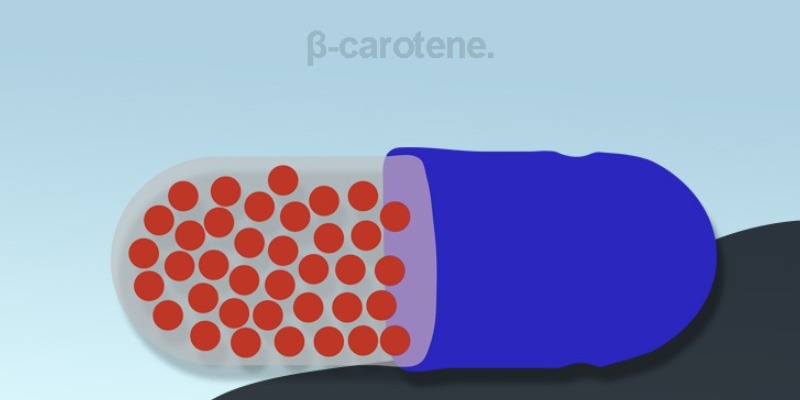
Encapsulation of β-carotene using spray drying: Enhances stability and increased solubility
In Summary
β-carotene possesses 100% Vitamin A and provides 80% Vitamin A of fruits and vegetables. A steady increase in demand for β-carotene can be seen in the present world due to its anti-cancer activity and its implication as a free radical and biological antioxidant. Its supplements can interact with drugs like statins and mineral oil.
β-carotene possesses 100% Vitamin A and provides 80% Vitamin A of fruits and vegetables. A steady increase in demand for β-carotene can be seen in the present world due to its anti-cancer activity and its implication as a free radical and biological antioxidant. Its supplements can interact with drugs like statins and mineral oil.
Vitamin A is abundantly found in onions, carrots, peas, spinach, and squash. A major challenge is to obtain a stable vegetable source of β-carotene for commercial use. It is prone to oxidation during storage; hence, encapsulation of β-carotene helps to enhance its stability by protecting it from oxidation. However, selecting the ratio of encapsulation material is a key aspect. Typically, maltodextrin is used as a coating material due to its cost-effectiveness. Although maltodextrins are available commercially in different molecular weights, higher weighing value-form denser wall of coating and thus, lead to reduced oxidation.
For spray drying application, up to 20-40% maltodextrin is used to have an optimized result. However, its final usage is dependent on the end-user application of β-carotene.
At Delta Formulations, β-carotene can be processed according to the needs of your application. The processed product can be even separated based on the desired particle size and packaged according to your requirements.
Some typical applications of β-carotene:
- Food supplement
- Natural dye
- Food additive